Does globalization really effect the ecological world? The answer to this questions is yes.
The first main area is that globalization has affected the genetic diversity within the agricultural world. This has begun mostly since the 1970’s. Since this time we have seen major pharmaceutical companies purchase the world largest 1,000 seed production companies. We have seen these companies affect the core genetics of the seeds making them into hybrid units. Therefore the core non-hybrid units have seen a major reduction in the production of these vegetables. One of the biggest was a drop by 41% in the production of non-hybrid seeds for peas. This is huge as these numbers continue to fall then most of the world’s crops will become a hybrid plant rather than the native non hybrid units. One place we can see the effects of genetic diversity is in India. They have used high yielding seeds to grow rice. It is estimated that India has grown over more than 30,000 species of rice. According to David Ehrenfeld, he tells us that within the next 20 years the diversity of the rice species will drop by one third and within the next 20 years following it we will only see a total of 50 different species of rice that are produced in India (Ehrenfeld, 2003).

Retrieved December 8, 2014. (Google Images Hybrid Seeds, n.d.)
Globalization has also had an impact in the wildlife community. In 1995, the primiliary estimated number of wildlife species that were on the extinction watch was between 100-1000 species. According to Ehrenfeld, in the year 2000 we saw that 25% of these species were to be considered extinct (Ehrenfeld, 2003). This is in due to several factors that the human race has had on the world, such as construction of dams, fish hatcheries, spread of human life to previously non-habiltated ecosystems, as well as the human population hunting and fishing animals to extinction. All of these factors are due to the globalization of technology and trades.

Retrieved December 8, 2014. (Google Images Extinction, n.d.)
The second main area is the environmental costs that are associated with globalization. We can not dispute the fact that one aspect of globalization has been the business of trading goods with other countries. This has had a major impact on the environment. In can not be desputed since the trade industry has become into full boom, we have seen an increase in pollution within the environment. This can be seen not only in the air, but also in the water and soil of the world. Ehrenfeld gives us an example of this. He talks about how in tawaian there due to the trade industry many of their forests have been cut down to lead way for factories and production of goods to take place. This has helped to increase their pollution ten fold in air quality and the depletion of the soil quality (Ehrenfeld, 2003). With the pollution of the world increasing, we can see that globalization can be linked and play a role in global warming.
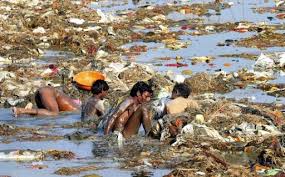
Retrieved December 8, 2014. (Google Images Pollution, n.d.)
